

Generating dealership inquiries is only the first step. The real challenge is converting them into qualified appointments, test drives, and vehicle sales.
Delayed responses, generic follow-ups, and disconnected systems can cause potential buyers to lose interest.
Automotive marketing automation helps bridge this gap by connecting CRM, AI-powered insights, and personalized communication to move buyers from initial inquiry to showroom visit.
Why Dealership Leads Go Cold Before Reaching the Showroom
A vehicle inquiry signals customer interest, but it does not guarantee a purchase. Buyers may contact multiple dealerships, compare prices, explore financing, or continue researching before making a decision.
Several operational gaps can cause dealerships to lose these opportunities:
- Delayed responses: Buyers may move on when their inquiries are not addressed promptly.
- Generic follow-ups: Repeated messages that do not reflect vehicle interests or purchase needs can reduce engagement.
- Disconnected systems: Sales and marketing teams may lack visibility into the same customer interactions.
- Poor lead prioritization: High-intent buyers can receive the same attention as early-stage prospects.
- Limited purchase visibility: Sales representatives may not know when a customer plans to purchase.
The challenge is not always generating more leads. It is managing existing inquiries effectively and maintaining engagement until the customer is ready to visit.
Understand What Happens After a Buyer Submits an Inquiry
A dealership’s lead conversion process involves several connected interactions.
A typical customer journey includes:
- A shopper submits an inquiry about a specific vehicle.
- The CRM captures the inquiry and assigns it to a sales representative.
- The sales team contacts the customer and confirms vehicle availability.
- The customer discusses pricing, financing, or trade-in options.
- The dealership offers a test-drive appointment.
- The customer visits the showroom to inspect the vehicle and discuss the purchase.
- The sales team follows up and works toward closing the deal.
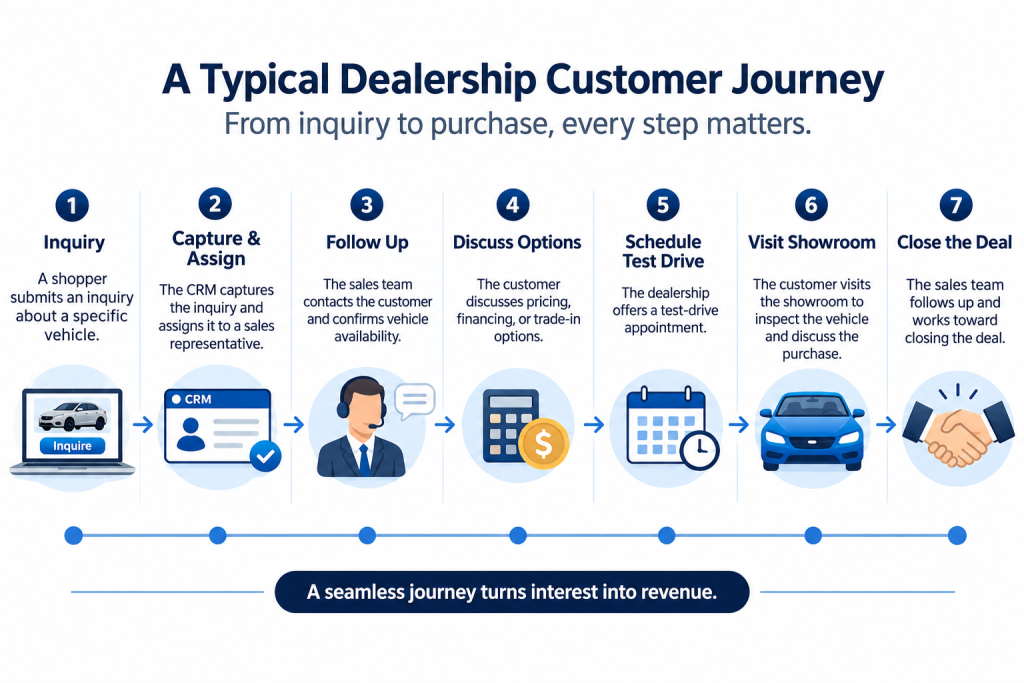
Each stage creates an opportunity to improve customer engagement.
According to Podium’s Automotive Lead Management: From Inquiry to Test Drive, effective lead management involves five connected stages: capture, consolidation, routing, response, and follow-up. The article emphasizes that a fast initial response is only one part of the process. Leads also need clear ownership, useful answers, and appointment scheduling.
Build Automated Follow-Up Journeys Around Buyer Intent
Not every dealership inquiry requires the same response. A shopper requesting financing information has different needs from someone repeatedly viewing a specific vehicle.
Marketing automation allows dealerships to trigger relevant communication based on customer activity.
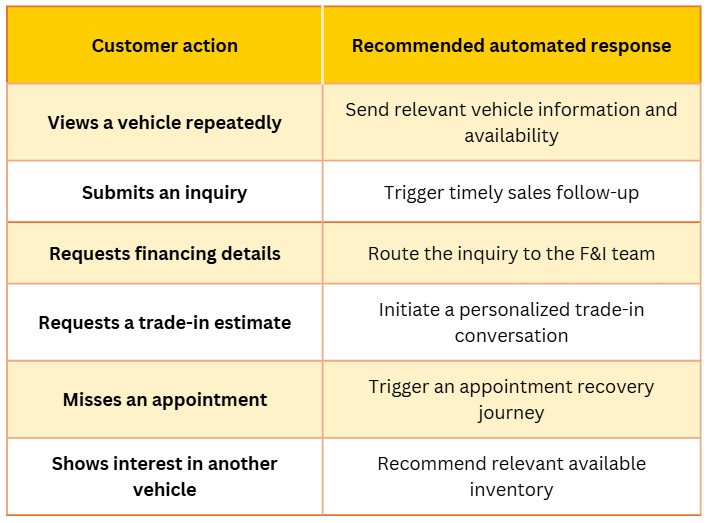
These workflows help dealerships stay in touch without relying entirely on manual reminders.
Affinitiv’s 8 Dealership Automation Workflows for Email and SMS explores how dealerships can use automated communication for lead follow-up, inventory engagement, and appointment reminders.
The goal is to make every interaction relevant to the customer’s next buying decision.
Use AI to Prioritize Leads That Are More Likely to Buy
AI-powered lead scoring analyzes customer interactions, vehicle interests, and engagement to identify high-intent buyers and help sales teams prioritize follow-ups.
AI can help dealerships:
- Identify high-intent engagement patterns.
- Prioritize leads based on available customer information.
- Recognize repeat interactions across channels.
- Support sales representatives with relevant customer insights.
- Identify opportunities for timely follow-up.
The Cox Automotive AI in Auto Retail Tracker (2026) reports that 40% of surveyed dealers use AI to coordinate customer follow-up. However, only 22% of AI-using dealers reported experiencing sales and revenue growth from AI.
This highlights an important distinction: adopting AI is not the same as improving dealership performance. AI initiatives need clear workflows, reliable data, and measurable business objectives.
Personalize Customer Engagement Across the Buying Journey
Customer engagement should reflect what shoppers are interested in and where they are in the buying process.
Instead of sending the same promotional message to every inquiry, dealerships can use automated journeys to deliver relevant communication.
Examples include:
- Vehicle interest: Send vehicle-specific information, images, and verified availability.
- Financing inquiries: Share relevant financing information and connect customers with the appropriate team.
- Trade-in opportunities: Initiate conversations based on customer interest in upgrading or replacing a vehicle.
- Test-drive scheduling: Send appointment confirmations and reminders.
- Post-visit follow-up: Continue conversations with customers who need more time to decide.
- Inactive prospects: Re-engage previous inquiries with relevant inventory or updated offers.
This approach makes car dealership lead nurturing more consistent while helping sales representatives focus on meaningful customer conversations.
Connect Sales, F&I, and Marketing Automation
Marketing automation works best when customer information is connected across dealership operations. Integrating CRM and marketing systems helps teams:
- Share customer interaction history.
- Route financing inquiries to the right team.
- Connect trade-in opportunities with vehicle interests.
- Track follow-ups.
- Reduce manual tasks.
This creates a connected customer journey from initial inquiry to showroom visit.
Measure the Journey from Inquiry to Sold Unit
Lead volume alone does not show whether dealership marketing is generating business results.
Dealerships should measure performance across the complete inquiry-to-sale journey.
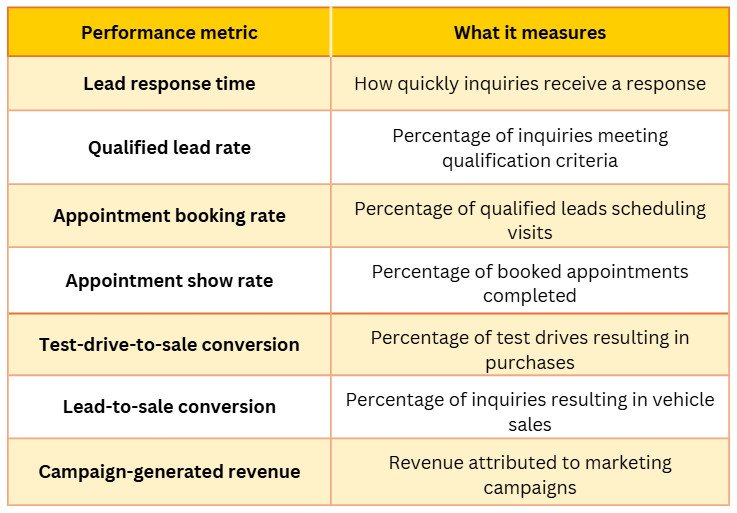
These metrics help dealership leaders identify where potential buyers drop out and where automation can improve conversion.
Conclusion:
A dealership inquiry is an opportunity, not a completed sale.
Turning that opportunity into a showroom visit requires timely responses, relevant follow-ups, effective lead qualification, and coordination between sales, marketing, and F&I teams.
AI and automotive marketing automation can bring these activities together, helping dealerships manage customer interactions more consistently and make better use of their existing lead pipeline.
Turn More Dealership Inquiries into Revenue Opportunities!
Your dealership may already have the leads it needs. The opportunity could be in how those leads are qualified, followed up, and converted.
Marmato Digital helps organizations connect marketing operations, CRM, AI strategy, and business process automation to improve how customer opportunities move through the revenue journey.
Book a consultation with Marmato Digital to explore how AI-powered dealership marketing automation can help your team improve lead management, strengthen customer engagement, and generate more showroom opportunities.
LET’S CONNECT AT NADA 2027!
Let’s discuss how AI, CRM, and automation can improve dealership performance and drive revenue growth.
Subscribe to Newsletter
Get our latest blogs directly to your inbox.


